

Tips & Resources
Tenant Eviction Assistance
Eviction is stressful, but it’s important to be proactive and understand your rights as a tenant in Baltimore City. If you think you will be evicted soon or are falling behind on rent, consider reaching out to a lawyer or one of the free resources below as soon as possible. If money is tight, some of these resources offer help with food, utility bills, and other daily essentials.
Have questions?
Contact the Sheriff’s Office Eviction Services team at 410-396-7412.
Resources for Tenants Facing Eviction
Eviction isn’t easy for anyone involved—that’s why the Baltimore City Sheriff’s Office (BCSO) is here to make sure things go smoothly, by upholding the law and offering support to displaced Baltimoreans.
Baltimore City Community Action Partnership (CAP) Centers
Walk-ins welcome Monday–Friday from 9 a.m.–3:30 p.m.
Department of Social Services
Emergency assistance may be available to families with a minor (21 years and under) at home.
Maryland District Court Help Center
Walk-ins welcome Monday-Friday from 8:30 a.m.–4:30 p.m. Online chat available.
Legal Aid Bureau
Complete an intake form at mdlab.org. Walk-ins welcome Mondays, Wednesdays, and Fridays from 8:30 a.m.–2:30 p.m.
Tips for Tenants Facing Eviction
1. If you fall behind on rent or think you’re going to be evicted, reach out to legal and financial resources as early as possible.
2. You may be able to get support for other bills, like food and utilities, allowing you to use available funds to pay rent.
3. Your landlord cannot evict you to get back at you for complaints or lawsuits. If you believe you’re being discriminated against or are being threatened with illegal fees or your landlord is neglecting repairs, you are protected by the law. Research “tenant rights” and reach out to a lawyer for assistance.
Eviction is stressful, but it’s important to be proactive and understand your rights as a tenant in Baltimore City. If you think you will be evicted soon or are falling behind on rent, consider reaching out to a lawyer or one of the free resources below as soon as possible. If money is tight, some of these resources offer help with food, utility bills, and other daily essentials.
*The information contained herein is not legal advice and is not a substitute for, and does not replace the advice or representation of, a licensed attorney.
How the Eviction Process Works
An overview of the eviction process is outlined below. Understanding how this eviction works can empower you to make decisions that may help you stay in your current home.
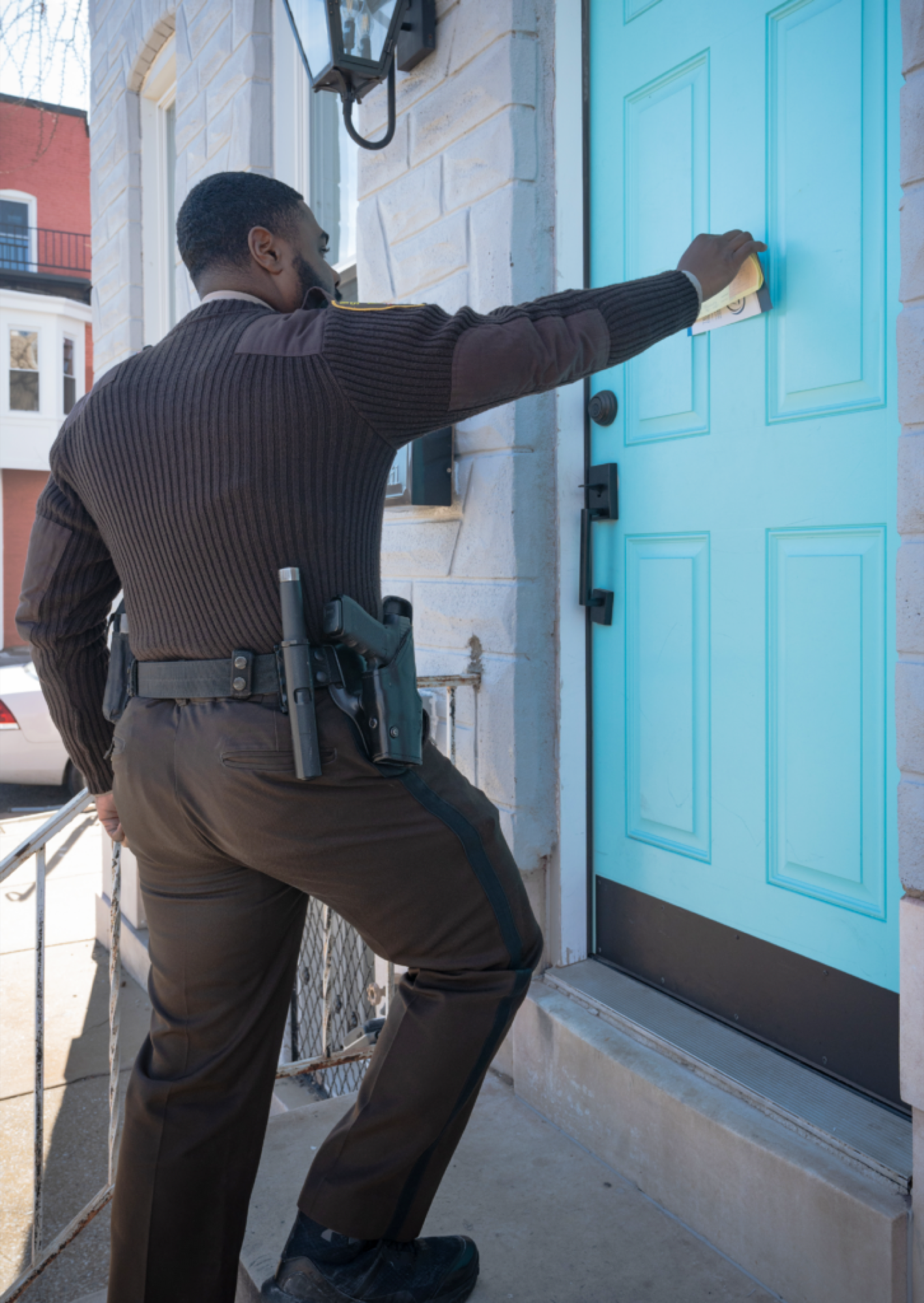
1. Warrant of Restitution
If a Baltimore City judge decides a tenant owes rent and has not paid, appealed, or posted bond, the judge will order a Warrant of Restitution, instructing the BCSO to evict the tenant. A signed Warrant of Restitution will be mailed to both the tenant and the landlord. The full payment must include all costs included in the order.
2. Scheduling Eviction
After a Warrant of Restitution is signed by a judge, your landlord will work with the Sheriff’s Office to schedule an eviction. Eviction must be scheduled far enough in advance for the landlord to provide sufficient notice to the tenant(s).
3. Landlord Notifies Tenant of Eviction Date
Your landlords must provide notice of the eviction date in two separate ways:
- By First-Class mail with a certificate of mailing, at least 14 days before the scheduled eviction.
- By posting notice on the premises, at least 7 days before the scheduled eviction.
4. Options for Tenants
Before the scheduled eviction, you have two options:
Move out. The only way to protect your belongings is to move them out before the eviction date.
You can “pay and stay.” Unless prevented by the judge, you may be able to pay the amount ordered, which may include back rent and fees, with cash, a certified check, or money order.
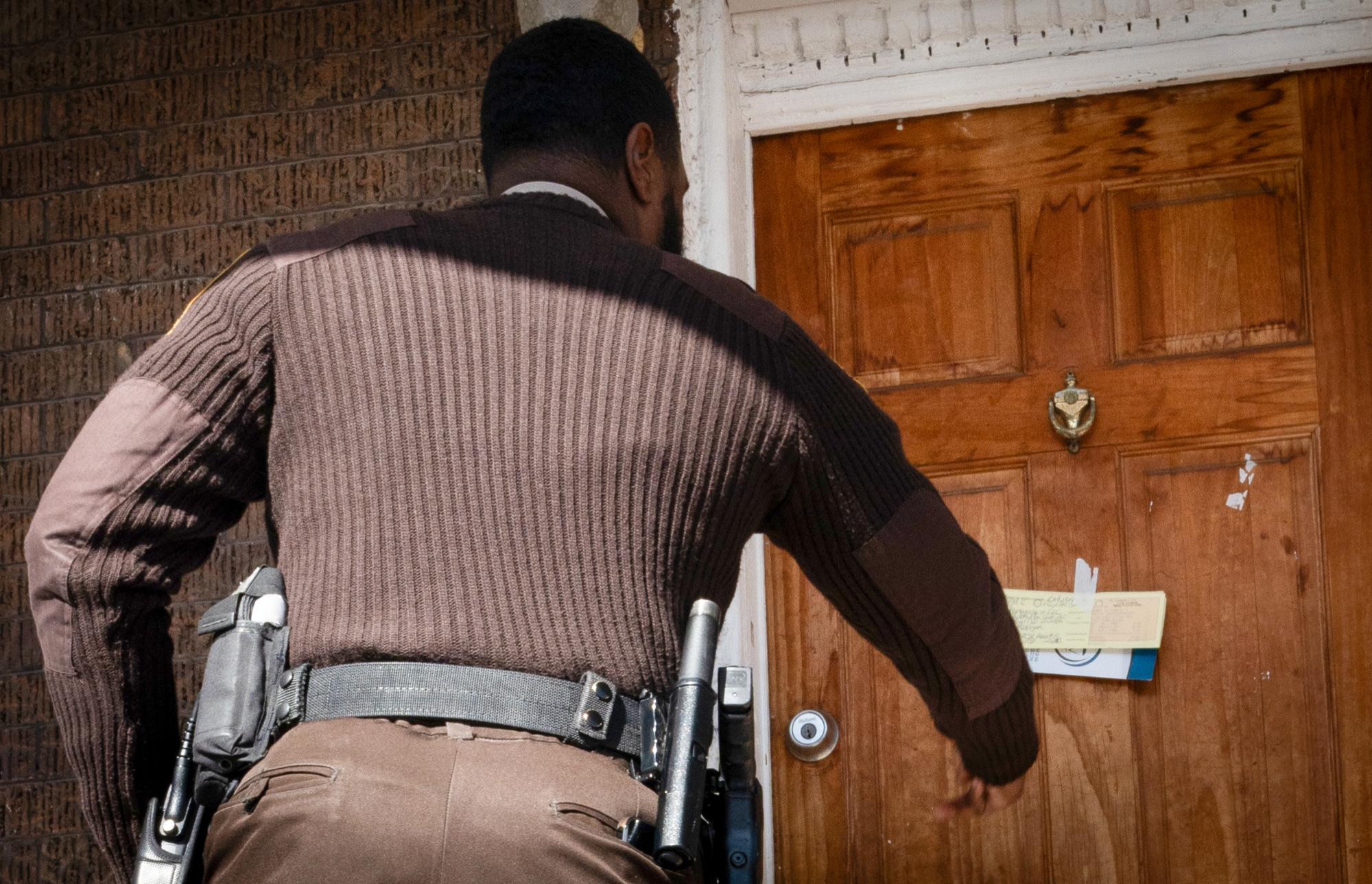
5. At the Eviction
On the scheduled eviction date, a member of the Sheriff’s Office will arrive to oversee one of the following scenarios:
- A landlord or agent must be present to change the locks on the property and take back possessions.
- If you are present and have the right to “pay and stay,” the Sheriff’s Office representative will require the landlord or agent to accept payment and the eviction will be cancelled.
- The Sheriff’s Office representative will verify that the landlord provided sufficient notice to tenants. Tenants may challenge whether the appropriate notices were properly sent. If the Sheriff has doubts, the issue will be referred back to a Baltimore City judge, who will decide whether the eviction is cancelled or not.
6. Property Disposal
After an eviction, your property is considered abandoned and may be disposed of by the landlord.
- It is illegal for landlords to dump abandoned property on any public setting, like streets, sidewalks, or alleys. Call 911 to report illegal dumping by landlords.
- Landlords are required to dispose of abandoned property by transporting it to a landfill, donating it, or other lawful means.